REIN GOLD
 Go back

4 December /Wednesday/ Start: 19.00 End: 21.30
Opera Hall Sofia Opera and Ballet REIN'S GOLD Prologue from the tetralogy "The Ring of the Nibelung" in four scenes by Richard Wagner
Director Plamen Kartalov Scenic designer Hans Kudlich Costumes Hristiana Mikhaleva-Zorbalieva Lighting designer Andrey Khaidinyak Multimedia Ivan Lipchev Construction design Eng. Georgi Georgiev Assistant Director Yulia Krasteva Head of Stage Design Nela Stoyanova Production Designer Christian Stoyanov Concertmaster Maria Evstatyeva Assistant Director Stefka Georgieva Assistant Director Theodore Georgiev Assistant Director Vyara Karabelova Concert Rehearser Yolanta Smolyanova, Stoyan Martynov English subtitles Maria Pashova Cinematographer Nia Nedkova Krassimir Kashev, conductor Mirena Mitreva, percussion teacher at the National School of Music and Performing Arts "Christina Morfova" - Stara Zagora
Votan - Veselin Mikhailov Frika - Mariana Tsvetkova Alberich - Plamen Dimitrov Loge - Daniel Ostretsov Mime - Krasimir Dinev Fafner - Peter Buchkov Fasolt - Stefan Vladimirov Doner - Svetozar Rangelov Fro - Hrisimir Damyanov Fraya - Silvana Pruvcheva Erda -. Vesela Yaneva Voglinde - Stanislava Momekova Velgunde - Ina Petrova Floshilde - Alexandrina Stoyanova-Andreeva Sofia Opera Orchestra Students of the National School of Music and Performing Arts "Christina Morfova" - Stara Zagora
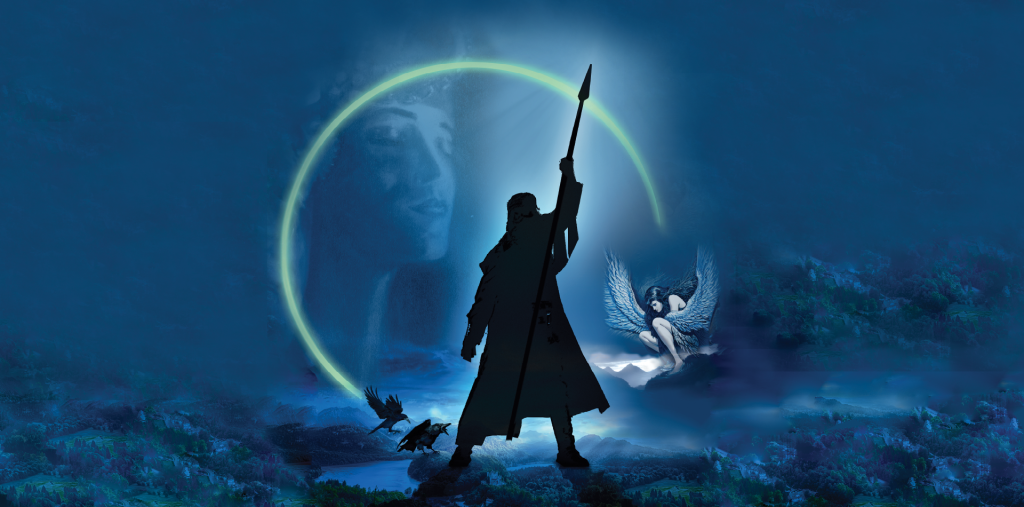
Based on myths, "The Ring of the Nibelung" is a political parable about the destruction of human society, of a dark clash and bloody struggles between clans, told in four evenings. The beginning is given with the very first one, "Rhine Gold". It is a symbol of wealth stolen because of greed, avarice and the struggle for power and authority. From a free world of universal harmony of nature is born the evil spirit of destruction, envy, violence and greed for power. Wagner's heroes may be among us, may be, sadly, our contemporaries, may be thrust into our society and into struggles we know so well.
Richard Wagner's musical language has the powerful quality of constantly producing theatrical worlds. In them, characters and situations are springs from a homogeneous whole from whose energy the action episodes are ignited.
"The performance is for the spectators and they participate and complete with their evaluations the thoughts of the authors and their interpreters. Let us hope that Nietzsche's reflections also apply to us: 'For an event to acquire greatness, two conditions are necessary: the greatness of the spirit of those who carry it out, and the greatness of the spirit of those who experience it,' says the director of the performance, Plamen Kartalov.